Final Fantasy, really, is all about the characters. The
characters drive the story forward. It is the characters who you fall in
love with, who you care about, who you emotionally engage with. It is
the characters, their design, personalities, and, of course, kick ass
special attacks, that make Final Fantasy so beloved. Some are easy to
predict. Some... less so. And yes, even some FFXIII characters make the
cut.
Tifa Lockhart - Final Fantasy VII
Let's
talk about love triangles. Cloud clearly fancied Aeris, but she was
more interested in Sephiroth, or was that Zak? Anyway, she died, so that
left Tifa, owner of the 7th Heaven bar and member of terrorist group
AVALANCHE. She quite obviously fancied Cloud but wasn't really doing it
for him. Got that? Good. Tifa's no-nonsense approach and brutal punches
endeared her to those who found Aeris too sickly sweet to swallow. She
didn't suffer any of Cloud's emo crap, and wasn't afraid to tell him to
get over himself when he was sulking. She was as sexy as she was
confident, too. She had nice legs and big breasts. What more could we
ask for?
Cid - various
There's
a Cid in almost every Final Fantasy game. From VII's chain-smoking Cid
Highway to XII's wonderfully-named Doctor Cidolfus Demen Bunansa, Cid's
usually an airship pilot, or a mechanic, or a tinkerer of some
description. But in recent times he's expanded his skill set, and even
taken an interest in the more villainous side of Final Fantasy character
life. The aforementioned Doctor Cid was a bad guy - the first Cid
villain in a Final Fantasy game. And, without wanting to spoil anything
for you new Final Fantasy XIII owners out there, that game's Cid is a...
how shall we put it... interesting fellow, too. Now, the question we
want answered is: why? Why have a Cid as a recurring character name in
the Final Fantasy series? What is it about the name Cid, that Square
Enix loves so much? Answers on a postcard please.
Snow Villiers - Final Fantasy XIII
He
might have a silly, effeminate name, but all Snow, the
broad-shouldered, bandanna-wearing fist fighter from FFXIII, wants is to
be a hero. But when his wife is turned to crystal, his world turns
upside down. How he deals with this, and his difficult relationship with
Lightning, and the young Hope, who blames him for his mother's death,
is perhaps the most interesting aspect of FFXIII. On a more juvenile
level, he's great because his punches sound incredibly meaty and he
summons the sexy Shiva sisters, who come together to form a motorbike
which he rides on. You don't have to be Professor Love Muscle to spot
the sexual references here...
Aeris Gainsborough - Final Fantasy VII
Aeris'
enduring appeal owes much to her shocking death halfway through FFVII.
She's been martyred, in a way. Up to that point, she was a likeable,
inoffensive love interest in the stereotypical Japanese fashion; a
flower girl with secrets and a talent for spell casting. But she was
valued more on a pure gameplay level: she was also extremely useful in
combat, and one hell of a healer. After her heartbreaking death, and
subsequent burial, players felt a hole not only in their hearts, but in
their balanced front line party makeup. Still, her death ranks as one of
the most memorable video game scenes of all time, and one of the
bravest moves on the part of a game developer. Watching it on YouTube
now, it's hard not to feel tears well up. Well, sort of.
Lightning - Final Fantasy XIII
Lightning
is moody, monotone, and an ex-soldier. Remind you of anyone?
Comparisons with FFVII's Cloud have come thick and fast, and with good
reason. Even legendary Final Fantasy character designer Tetsuya Nomura
has admitted that, for Lightning, he was asked to design a female Cloud
Strife. While she may never prove as popular as VII's leading man, she's
a worthy addition to this list. Her guilt over her sister's horrible
fate lends her a determination during the first half of FFXIII. But she
gets really interesting during the second half of the game, when
revelations question her very being. Well, there's that, and the fact
that she's slap-yourself-in-the-face sexy. There's something about
pink-haired vixens and gun blades that get us all hot under the
collar...
Bahamut - various
He's
not a playable character, and he never talks, but giant winged
monstrosity Bahamut still ranks as one of the most memorable Final
Fantasy creations. He is, essentially, a double hard dragon you can
summon, but his recurring appearance across the series has resulted in a
"his master's dog" relationship with the player. He's always there if
you need him, appearing from the heavens in a blaze of magic emblems and
raining down the pain on all who would seek to harm you. His trademark
attack, the Mega Flare, sees him charge up all sorts craziness from just
in front of his terrifying mouth before blasting the whole world to
smithereens. Boom.
Lulu - Final Fantasy X
Mysterious,
calm, and sultry, Lulu is one of the best-designed Final Fantasy
characters ever. Her dress, made up entirely of belts strapped to each
other, was a work of art, and, occasionally, allowed you a thrilling
glimpse at the wonder it concealed. On the battlefield, she excelled as a
damage dealing spell caster. Physical attacks weren't her strong point -
and it was easy to know why: her basic attack involved laying a doll on
the ground and have it trot over to your enemy and smack them - a
hilarious sight. But that was the only hilarious thing about Lulu. She
was a serious, scathing girl, a bitch witch with an attitude. Square
Enix, as it likes to, never missed an opportunity to exploit her lovely
figure; when she cast a spell, she'd often provocatively lean forward,
showing her ample cleavage to all. She was easily the most interesting
character in Final Fantasy X. But that's not saying much: Tidus and
Wakka, two of the most annoying characters in Final Fantasy history,
were in that game.
Kefka Palazzo - Final Fantasy VI
Final
Fantasy VI's big bad villain was messed up. Proper messed up.
Nihilistic to the core, Kefka wanted nothing more than to set the world
aflame. The guy was horrible, killing millions at a whim and forcing
everyone he spared to worship him. The game's epic conclusion - one
listed by many as their favourite boss battle - is an intelligent
philosophical discussion that puts the likes of Fight Club to shame.
Kefka believes all life to be meaningless and mortal existence
purposeless, and therefore wishes total destruction on the world.
However, the player controlled party argue the toss, revealing the
meaning in their own lives. Unable to reconcile this conflict, Kafka is
enraged. Take that, Heavy Rain.
Cloud Strife - Final Fantasy VII
Spiky-haired
emo with a big sword. That's all Cloud was. Now, the JRPG front man is a
cliché, but in 1997, Cloud reverberated around the gaming universe. He
was so cool - so cool! His sword swipe attacks looked incredible on the
PlayStation (go Omnislash!), and his confused, dour personality struck a
chord in the heartstrings of millions of teenagers across the world. We
all loved him as much as we wanted to be him. He remains the series'
most popular character, a poster boy for the entire JRPG genre. The
entire gaming world awaits his return. Surely it must come? But will it
be via a Final Fantasy VII remake, or something new entirely?
Sephiroth - Final Fantasy VII
If
Cloud was plus, then Sephiroth was minus. Cloud had bright blue eyes
and spiky blonde hair. Sephiroth had bright cyan eyes and long,
platinum-coloured hair. Cloud had the big, fat Buster Sword. Sephiroth
had the long, thin Masamune. The Cloud/Sephiroth rivalry drove FFVII's
pulsating storyline to an epic conclusion. While Cloud eventually
defeated his foe, you always felt that Sephiroth was more powerful than
anyone who dared to oppose him. But he was just so cool, wasn't he? His
nonchalant, condescending behaviour, his devastating sword swipes -
really, we were rooting for Sephiroth as passionately as we were for
Cloud. As much a victim of mega corporation Shinra as Cloud and his
eclectic band of followers, Sephiroth's motivations were shrouded in
mystery, and are still debated today. Final Fantasy, and indeed gaming,
has never known a greater villain.
We’re only considering the main numbered games. No spin-offs, no
sidequels, just the primary series. So, who caused the most pain, killed
the most people or ruined the most lives?
Includes contributions from Brett Elston and Christian Nutt
Vayne (Final Fantasy XII)
Most Final Fantasy antagonists are in your face - personally
insulting you, killing your friends and generally being a huge pain in
the ass. Vayne isn't like that. He manipulates governments and
ruthlessly kills his family to achieve political power. He then flexes
this dubiously acquired power over armies, over researchers finding new
magical technologies, over anything that will bolster the claims of his
Archadian Empire. Above: Doesn’t get any more exciting than this shot of Vayne talking
Caught up in the sweep of his ambitions, you'll constantly find
yourself fighting indirectly against Vayne and his loyal servants. As
you cut down these minions one by one, even his younger brother comes to
your aid – before long, all of his well-laid plans fall through, and
his desire to save mankind from the grip of the gods is brought to a
close. Not before this weird-ass final fight, though:
Above: One of the strangest final battles the series has coughed up
Despite this “I’m going to turn myself into an airship cloud dragon!”
finale, we loved Vayne as an against-type, almost down to earth
antagonist. A welcome departure from the highly stylized and
mass-murdering villains of similar games.
Golbez (Final Fantasy IV)
Even though this towering knight is upstaged at the end of the game,
you'll hate Golbez's guts from the moment he sets foot on the screen. He
plays with everyone’s emotions and secretly rules the throne of Baron
Castle, and as such is directly responsible for hero Cecil’s defection,
setting the whole game into motion. Golbez affects almost every member
of your party on a personal level, either by taking something precious
or killing characters in cold blood. Few bosses are routinely in your
face throughout the whole adventure – Golbez delights in these hands-on
moments like no other. Above: Why, here he is paralyzing the team so he can feed you to his pet dragon
The final third of the game unleashes astounding revelations about
Golbez and his otherworldly origin. This twist makes him, his reasoning
and his actions more interesting, and even tragic as the final lines of
dialog are spoken. Golbez may not destroy the world, but in 20 short
hours he manages to wreck the personal lives of your entire group, order
dozens of innocents to their death and nearly usher in a new age of
eternal destruction. Damn.
Sin (Final Fantasy X)
It's hard to give such prominent placement to a giant whale… monster…
thing, but by the end of the game you'll understand exactly why the
mysterious, destructive monster known as Sin ranks so high. What
initially seems like a mindless monster with no purpose other than to
randomly terrorize the world (and kill thousands of people) becomes a
mind-ripping plot twist. Without getting into too much detail, Sin is
actually Jecht (the dude up there) and is stuck in a never ending cycle
of violence. Yeah, that’s pretty vague. We’ll stick with that.
The creature is an indestructible enigma throughout the entire quest,
and only when you brace for the final stretch do you realize the
terrible truth about Sin and the world of Spira.
In the end, Sin is a total mindjob, from creepy introduction to blazing
finale. And the ending... that must be the most satisfying high five in
the history of games.
Kefka (Final Fantasy VI)
This walking loony bin doesn't have any fancy plots - Kefka just
wants to destroy the world. Unlike most other Final Fantasy villains,
his methods are painfully overt. It's clear from the first 10 minutes
you're going to have to take him down, and even though you (and
eventually his villainous Empire friends) try to topple him, Kefka
succeeds in claiming ultimate power. He then razes the world, for real,
realigning continents and torching what little survives. No joke, he
actually does convert an entire world into a charred, depressing relic.
The scale of destruction even prompts one of the game’s major characters
to commit suicide – though she fails even in that. Above: This used to be an idyllic green and blue world, now reduced to dust and patches of dying vegetation
An honorable clan of knights refuses to lie down and surrender, so
Kefka poisons the water supply and kills the entire town. He uses parts
of the broken world to construct his own patchwork lair. There's no
respite from a madman who controls the planet, and it takes a herculean
effort from the team to even muster up the courage to face him again.
If only there were a bit more meat to his goals, Kefka could have
been the ultimate villain in the series. He’s a bit like the Joker,
dressing in a comedic costume, laughing maniacally at all those who fall
at his feet and causing chaos just for chaos’s sake. Granted, he’s
one-dimensional and lacks any nuance that other (and technically better)
baddies enjoy, but in Kefka’s case, his utter lack of any other
qualities is what makes him stand out. Perhaps he was sane before he got
involved with the Empire and its Magitek soldier program, but now he’s a
lost cause. Kefka just wants to kill, and relishes the chance to do so.
Sephiroth (Final Fantasy VII
Yeah yeah, it’s an obvious, popular choice, but even the hardiest of
haters has to acknowledge Sephiroth's devious accomplishments. Upon
discovering his own twisted, gene-manipulated history, he slaughters an
entire village, burns it to the ground and smiles about it as he calmly
walks away. Above: Sephiroth returns to and destroys Nibelheim in arguably
the most famous scene in all of RPGs, recreated here in Advent Children
Later, he coldly slices down the beautiful and sweet Aerith, sending
millions of pre-pubescent fanboys into teary eyed fits of unrequited
love (SPOILER!). At this point in the game you’ve already witnessed many
displays of ruthlessness, but this straight-up murder of a primary
character does indeed carry a massive weight even today. Aerith is
practically about to save the world, then, mere seconds later, dead at
the hands of a villain who maintains eye contact as he withdraws his
sword. Creepy, man.
After usurping what's left of a powerful alien entity called Jenova
(which he incorrectly believes to be his mother), Sephiroth succeeds in
unleashing massive monsters from the guts of the planet, turning them
loose in a wild rampage that wrecks several major cities. All this while
he’s attempting to crash a giant meteor into the world so it will
reveal its regenerative Lifestream, which he plans to absorb and take
over, becoming a god in complete control of the globe. That’s a lot to
process.
Sephiroth, unlike most villains in Final Fantasy, begins and ends the
game as your main adversary. He's never dumped at the last second for
some pinch hitting omni-boss or revealed to be under the spell of some
higher being. He's also not a one trick pony like Kefka - Sephiroth may
be vicious, but his back story and motives are much richer than the
mischievous stylings of VI's jester. Seph’s even got a bit of Golbez’s
tragic past, in that all his misdeeds aren’t 100% his fault. Above: PSP’s Crisis Core fleshes out his background – he wasn’t always a murderous crackpot
And that's the bottom line. Hate him or not, Sephiroth hits all the
major points of excellent villainy and still walks away as a potential
victor, even when his final form is all but gone. His inextricable link
to the game’s main character, Cloud, makes the story and unfolding drama
all the better.
Think we’re full of it? Agree with Sephiroth’s spot but think ExDeath
was the most badass tree ever and should be on the list? You’d be wrong
of course, but we still want to know what you think.
Square Enix announced a slate of upcoming games appearing at E3 next
week, headed up by a pair of high-profile Final Fantasy releases.
Throughout E3, Square Enix will show off Final Fantasy XIII's concluding chapter Lightning Returns, along with the relaunched MMORPG A Realm Reborn: Final Fantasy XIV.
The company also teases "a first look at the next generation of Final
Fantasy," a statement that does not seem to refer to either FFXIV or Lightning Returns. Further details, however, are not yet available.
Other games appearing at Square Enix's booth include Eidos Montreal's Thief reboot and the "mystery thriller" Murdered: Soul Suspect. The Deus Ex series will occupy its share of booth space with the Wii U-exclusive Deus Ex: Human Revolution - Director's Cut and the recently announced iOS sequel Deus Ex: The Fall.
The HD remakes Kingdom Hearts 1.5 HD ReMIX and Final Fantasy X/X-2 HD Remaster will also appear at Square Enix's E3 booth from June 11 through 13. Square Enix's full press release is Shown below:
Diverse Lineup Highlighted by Signature Franchises, Compelling New Properties and Expanding Platforms
First Look at the Next Generation of FINAL FANTASY
LONDON (June 6, 2013) –Square Enix today announced its broad spectrum of
next-generation and current generation console, PC and mobile game
products to be unveiled during the Electronic Entertainment Expo (E3)
2013, June 11-13 at the Los Angeles Convention Center, Booth #1647. The
company's portfolio features new games from signature franchises, a
re-imagined classic along with compelling new properties.
FINAL FANTASY®, one of the most successful game franchises of all time,
will have a dominant presence in the publisher's booth with both FINAL
FANTASY® XIV: A Realm Reborn™, a stunning massively multiplayer online
role playing game that will enable players to create their own FINAL
FANTASY adventure, and LIGHTNING RETURNS™: FINAL FANTASY® XIII, the epic
conclusion to the series. Square Enix will also unveil the first look
at the next-generation of FINAL FANTASY.
THIEF™ is the reinvention of a classic franchise that allows players to
step into the silent shoes of Garrett, a dark and solitary thief with an
unrivaled set of skills. The most challenging heists, the most
inaccessible loots, the best kept secrets: nothing is out of Garrett's
reach. The mystery thriller Murdered: Soul Suspect™ will haunt attendees
as an entirely new game property where the main character travels
through both a modern day Salem, Massachusetts and a ghost world to
solve his own murder. Square Enix will also introduce DEUS EX®: THE
FALL™, the new installment of the award winning DEUS EX series.
Additional mobile and tablet games will also be at E3.
"Square Enix continues to show its global creative presence like no
other game publisher with products from its internal studios around the
world as well as key partners," said Yosuke Matsuda, representative
director of Square Enix Holdings Co., Ltd. "As the industry continues to
diversify and expand Square Enix is poised to lead that change with
products showcased at this year's E3."
Along with hands-on demonstrations of many games, E3 attendees will be
able to experience exclusive theater presentations for FINAL FANTASY
XIV: A Realm Reborn, THIEF and Murdered: Soul Suspect.
For the audience not attending E3, Square Enix will host an innovative
live online broadcast from its booth, allowing the publisher's
passionate community to get a sneak peak at the new titles' content and
interact with Square Enix developers. Viewers worldwide will be able to
tune in for the duration of the show (June 11 to June 13, 2013) for a
unique insider's perspective into Square Enix at the show. For a full
schedule please visit:
FINAL FANTASY XIV: A Realm Reborn is the first massively multiplayer
online role-playing game (MMORPG) to have been completely rebuilt from
the ground up with a focus on all systems, gameplay and player
experience. FINAL FANTASY XIV: A Realm Reborn invites players to explore
the realm of Eorzea with friends from around the world.
Platforms: PlayStation®3 system, Windows® PC
Developer: Square Enix Co., Ltd.
Available: August 27
THIEF
THIEF is the reinvention of the classic franchise that allows players to
take on the role of Garrett, the Master Thief. As the tide is about to
turn in the City, Garrett, takes cover amidst the growing uprising and
sneaks into the Baron's manor to steal his most prized possession.
Platforms: PlayStation®4 system, Xbox One®, the all-in-one games and entertainment system from Microsoft, Windows PC
Developer: Eidos-Montréal (A Square Enix Company)
Available: 2014
MURDERED: SOUL SUSPECT
The hardest case to solve is one's own murder. Murdered: Soul Suspect
takes players into a whole new realm of mystery where the case is
personal and the clues just out of reach. When Ronan O'Connor, a
detective with a checkered past, gets caught up in a violent burglary,
his life is brought to an untimely end by a brutal and relentless
killer. Shocked to find himself in the afterlife, his only escape from
the limbo world of 'Dusk' is to uncover the truth behind his killer,
track him down and bring him to justice using his detective instinct and
newfound supernatural abilities.
Platforms: Xbox 360® games and entertainment system from Microsoft, PlayStation®3 system, Windows PC
Developer: Square Enix Co., Ltd. and Airtight Games
Available: Early 2014
LIGHTNING RETURNS: FINAL FANTASY XIII
As Lightning, it is your mission to save souls so they may be brought to
a new world. However, with only thirteen days remaining, not everyone
can be saved. Armed with all-new weapons, player customization and
battle abilities, you are in a race against time to fully understand
your destiny. It all ends here.
Platforms: Xbox 360, PlayStation®3 system
Developer: Square Enix Co., Ltd.
Available: February 14, 2014
KINGDOM HEARTS HD 1.5 ReMIX
Fully remastered in high-def, KINGDOM HEARTS HD 1.5 ReMIX is a
compilation of the critically acclaimed KINGDOM HEARTS FINAL MIX and
KINGDOM HEARTS Re:Chain of Memories titles. Players can now relive the
origins of the celebrated franchise with Sora, Riku and the colorful
cast of Disney characters, including Mickey, Donald and Goofy.
Platform: PlayStation®3 system
Developer: Square Enix Co., Ltd.
Available: September 13 (Europe)
DEUS EX: HUMAN REVOLUTION® - DIRECTOR'S CUT
DEUS EX: HUMAN REVOLUTION - DIRECTOR'S CUT is the enhanced return to one
of the most critically acclaimed video game franchises of all time. By
offering players the chance to advance through the game in multiple and
vastly different ways, DEUS EX: HUMAN REVOLUTION - DIRECTOR'S CUT
provides an experience where every choice has a lasting consequence.
Director's Cut features include visual improvements, overhauled boss
fights, reinforced combat mechanics and much more making it the ultimate
HUMAN REVOLUTION experience.
Platform: Nintendo Wii U™
Developer: Eidos-Montréal (A Square Enix Company)
Available: 2013
FINAL FANTASY X/X-2 HD Remaster
FINAL FANTASY X/X-2 HD Remaster takes players into the adventures of Tidus and Yuna in beautifully remastered high definition.
Platforms: PlayStation®3 system, PlayStation®Vita handheld entertainment system
Available: 2013
Mobile and Tablet
DEUS EX: THE FALL
DEUS EX: THE FALL is the next chapter of the award winning DEUS EX
series. Developed by Square Enix Ltd. in collaboration with the original
DEUS EX: HUMAN REVOLUTION team at Eidos-Montréal and N-Fusion, DEUS EX:
THE FALL is a story driven action-RPG and the first DEUS EX in the
series to be released on mobile and tablet devices.
Mini Ninjas is the first mobile and tablet game in the action adventure
franchise. Based on authentic ninja values, this beautiful, fast-paced
game takes players on an epic journey, free from gruesome violence and
high on Ninja fun. Hiro and his Mini Ninja friends run, jump and slash
their way through spellbound lands to retrieve the stolen artefact from
the dragon.
Platform: iOS, Android
Developer: Magic Pockets SAS
Available: Now
About Square Enix Ltd.
Square Enix Ltd., a part of the Square Enix Europe business unit,
develops, publishes, distributes and licenses SQUARE ENIX, EIDOS® and
TAITO® branded entertainment content in Europe and other PAL territories
as part of the Square Enix Group. Square Enix Ltd. also has a global
network of leading development studios such as IO Interactive™, Crystal
Dynamics® and Eidos Montréal. The Square Enix Group boasts a valuable
portfolio of intellectual property including: FINAL FANTASY, which has
sold over 100 million units worldwide, DRAGON QUEST® which has sold over
61 million units worldwide and TOMB RAIDER® which has sold over 35
million units worldwide; and the legendary SPACE INVADERS®. Square Enix
Ltd. is a London-based, wholly-owned subsidiary of Square Enix Holdings
Co., Ltd.
More information on Square Enix Ltd. can be found at http://www.square-enix.com/eu/en/.
Square Enix's role-playing game pushed to February 2014 for Xbox 360 and PlayStation 3.
Lightning Returns: Final Fantasy XIII
has been delayed. Square Enix today announced that the role-playing
game will launch in North America on February 11, 2014, followed by a
launch on February 14 in Europe.
The game was previously targeted to release this fall. No rationale for the delay was provided.
Lightning Returns: Final Fantasy XIII is the final entry in the Final
Fantasy XIII trilogy. It takes place within the world of Novus Partus,
which contains four islands. The game chronicles the last 13 days of the
game's universe.
Gamers will control Lightning, as she seeks a way to save the world from
extinction. Lightning Returns: Final Fantasy XIII retains the Paradigm
Shift combat system, except now players can move Lightning around the
battlefield and swap weapons instantaneously.
The news comes just days before the 2013 Electronic Entertainment Expo in Los Angeles. Square Enix will reveal the future of Final Fantasy during the show, which may include a deeper look into the previously announced Final Fantasy title for the PlayStation 4.
With Final Fantasy XIII's release on the PlayStation 3 and
Xbox 360 quite literally just around the corner (March 9th), it's time
to take a walk down nostalgia lane and revisit the franchise's
distinguished past.
It's been more than two decades since Final Fantasy debuted
in 1987 as director Hironobu Sakaguchi's last ditch attempt to make
video games, and since then the series has evolved greatly. One
humongous merger, 12 single-player RPG epics, one Massively Multiplayer
Online Role-Playing Game with millions of subscribers and countless
spin-offs and remakes later, Square Enix has earned itself the
reputation of being one of the most influential and prestigious gaming
studios in the industry.
However, while gamers tend to remember Final Fantasy more for its
halcyon days back on the Super Nintendo and PlayStation, the series has
had its share of missteps as well.
With that said, here are some of the most defining, shining highlights in Final Fantasy history, and some of the moments best left forgotten.
The Best
Best Story -- Final Fantasy Tactics: War of the Lions
When Final Fantasy Tactics was first released on the
PlayStation in North America in 1998, there was no ignoring the
complexity of its Shakespearian-esque plot of friendship, war and
duplicity. However, due to a rushed localization job, the script was
rife with spelling and grammatical errors, many of them unintentionally
hilarious. Some of the most important parts of the story were either
ruined or completely lost in the translation process.
That was all fixed in 2007's PSP re-release Final Fantasy Tactics: War of the Lions.
The script was polished and the plot was embellished by animated,
voiced cut scenes, resolving a lot of confusion that plagued the
original. With the clutter finally cleared out of the way, Final Fantasy Tactics' narrative prowess truly revealed itself.
Its brilliant, complex cast of characters are diverse, but each are
individually tragic and sympathetic. The story is full of twists and
turns, and as the conspiracies and political betrayals grow, it becomes
apparent that no character is safe from the pervasive corruption and
greed that rules Ivalice. Grim and morose yet gripping and immersive, Final Fantasy Tactics's story is not only a landmark moment in Final Fantasy history, but video games as a whole. Most Memorable Soundtrack -- Final Fantasy VIII
It's difficult to rule which Final Fantasy game had the best soundtrack because music is so subjective. After all, what makes Final Fantasy X's sweeping piano score "To Zanarkan" better than Final Fantasy IV's classic "Edward's Harp" or Final Fantasy VII's haunting and ominous "One Winged Angel"?
Ultimately, it's 1999's Final Fantasy VIII that truly stands
out as having one of the most well-rounded, memorable soundtracks.
"Force Your Way" got the adrenaline pumping in battles, "The Landing"
fit SeeD's Normany Beach-esque assault perfectly, "The Man with the
Machine Gun" was a bizarre mix of rapid beats and electronic synth, and
"Fisherman's Horizon" and "Balamb Garden" inspired an aura of
tranquility that matched the setting.
On top of all that, Faye Wong's catchy, pop single "Eyes on Me" was
the first time Square Enix experimented with a vocal piece in a
soundtrack. The success of the song (it sold over 400,000 copies) opened
the door for Final Fantasy IX's "Melodies of Life", Final Fantasy X's "Isn't it Beautiful?" and more.
Least Conventional Hero -- Tidus (Final Fantasy X)
Some may write off Final Fantasy X's plucky protagonist as being a wuss and a whiner, but many neglect the fact that he's one of Final Fantasy's
few leading men who isn't a walking cliché. He's not a mercenary, he's
not seeking revenge against someone who murdered his family, and he's
not a brooding, amnesia-stricken, Byronic hero. Like most teenagers
Tidus' age, he enjoys playing sports, flirting with girls and suffers
from repressed father issues.
Tidus may not be the first person you'd expect to be waging a war
against an evil monster bent on destroying humanity, but that's what
makes him so personable and sympathetic. He's not an elite soldier, a
daring brigand or even a "Treasure Hunter" --he's just an ordinary guy
who finds himself in an extraordinary situation. Most Sinister Villain -- Kefka Palazzo (Final Fantasy VI)
Villains with Messiah complexes and plots to eradicate humanity might
be a dime a dozen in role-playing games, but guaranteed none are quite
as completely insane as Final Fantasy VI's devious, genocidal
antagonist. Kefka manipulates Terra into spearheading an assault on
Narshe, poisons an entire city's water supply, murders General Leo and
then kicks Emperor Gestahl off a floating continent to his death. In
fact, he's such a two-timing Judas Iscariot that he even betrays the
coalition of villains in Dissidia: Final Fantasy.
Suddenly, other villain's list of misdemeanors like burning down a
village, attempting to compress time to negate existence or kidnapping a
princess seems somewhat amateurish in comparison. Kefka wants to
destroy the world just like every other villain, but he makes sure
everyone suffers as much as possible in the process. Most Revolutionary -- Final Fantasy VII Final Fantasy VII takes this category with ease. It's
responsible for forging the long lasting relationship between Square and
Sony, bringing the series into the world of 3D and being one of the
first RPG's to extensively use CGI. More importantly, Final Fantasy VII's success made the Final Fantasy
name huge in North America and ushered it into the mainstream. Though
past iterations in the franchise had enjoyed a prominent following in
America, the launch of Final Fantasy VII is accredited for expanding its fan base substantially.
Whether Final Fantasy VII is the best Final Fantasy
is arguable, but there's really no denying that it drastically changed
the gamers' perception of RPG's. With its dystopian, urban setting,
vulgar language, detailed graphics and mature storyline, Final Fantasy VII established itself as an edgy, adult experience that even older gamers could better relate to. Most Badass Cid -- Cid Highwind (Final Fantasy VII)
Almost every Final Fantasy game has a Cid in it, and almost every one of those Cids totally digs airships. However, what made Final Fantasy VII's
Cid so exceptionally badass was...well...everything. Not only was he
one of the most powerful Cids in terms of gameplay (second to only T.G
Cid from Final Fanasy Tactics), but he can pilot airplanes,
massive airships and even a spaceship, all while chain smoking
cigarettes and shouting profanities at everyone within ear shot.
Admittedly, he does have a bit of a soft spot for his assistant Shera
(who he decides not to roast into a million, crispy pieces by
abandoning his launch into space), but the knowledge that Cid has a
heart underneath his foul language, propensity for violence and macho
posturing just makes him all the more badass.
FINAL FANTASY XIV: A Realm Reborn is a massively multiplayer online
role-playing game (MMORPG) that invites you to explore the realm of
Eorzea with friends from around the world.
Form a party and adventure with a multitude of players from across the
globe. Forge friendships, mount chocobos, and board airships as you and
your companions create your own unique stories in Eorzea.
Set out alone or enlist the aid of friends as you undertake epic quests,
battle familiar FINAL FANTASY monsters, and acquire unique abilities
and equipment. All the classic elements from the series that you have
come to know and love are waiting!
Embark on the adventure of a lifetime to help reforge the fate of Eorzea!
STORY
The history of Eorzea has been marked by a cycle of prosperous "Astral" and disastrous "Umbral" eras.
Now the land stands poised to enter another age of decline, a period
known as the Seventh Umbral Era. On the eastern border, the Garlean
Empire masses its troops for invasion, while the native beast tribes
summon their deities, the otherworldly primals.
The threats facing Eorzea will not easily be overcome.
All the hallmarks of the FINAL FANTASY franchise, including
genre-leading graphics and high-definition real-time cutscenes that
advance the game’s rich storyline. Incredible new graphics engine that
delivers a high level of detail and quality on both the PlayStation®3
and Windows PC platforms
A flexible class system that allows players to change to any of the
eighteen different classes on the fly simply by changing their equipped
weapon or tool
Breathtaking musical score by renowned FINAL FANTASY series composer Nobuo Uematsu
Cross platform play on Playstation 3 and Windows PC and Robust gameplay
features—such as Free Companies, story-driven player–vs-player content,
and primal summoning—to bring players together
The original release of Final Fantasy XIV began development under the codename Rapture in 2005.The game was officially announced in 2009 and developed using the Crystal Tools engine, which had previously been used for Final Fantasy XIII. This version was directed by Nobuaki Komoto and produced by Hiromichi Tanaka, who was also serving as the producer of Final Fantasy XI at the time.Akihiko Yoshida was the art director and Nobuo Uematsu
composed the soundtrack for the retail launch. Alpha testing ran from
April to June 2010 and beta testing ran from July to August. An open
beta was conducted in early September, the two weeks before release. The
game spent 3 months in beta, less than the 4 months previously
announced as the minimum testing period. News sources expressed concern that the game was not in launch condition, with "critical bugs" present throughout beta. The game premiered on September 22, 2010 to near universal negative reception. After two extensions to the initial free trial period, Square Enix President Yoichi Wada issued a formal apology to players and fans in December 2010.
In the letter, he announced a dramatic overhaul of the development team
as well as the suspension of monthly fees for the game until further
notice. Naoki Yoshida
took over the producer and director roles from Tanaka and Komoto, among
other sweeping changes. The upcoming PlayStation 3 version was also
indefinitely delayed.
In attempting to improve Final Fantasy XIV, Yoshida quickly
discovered a number of key tasks. First and foremost, he had to restore
trust in the player base while bringing the original release up to a
playable quality.
To address this, Yoshida began writing "Letters from the Producer"
which would discuss design direction, upcoming changes, player feedback,
and increase transparency in the development process.
However, outdated and cumbersome programming choices in the game code
prevented the more radical changes necessary to improve the game. Thus,
planning for a brand new game built from scratch began in January 2011
and development began in earnest by April, with work on a new game engine and server structure.
Meanwhile, the team's efforts on the original release first began to
come to fruition with patch 1.18 in July 2011, which included major
changes to the battle system, implementation of auto-attack and
instanced dungeons, removal of the controversial "fatigue" system, and
the introduction of the Grand Company storyline which would supersede
the original main scenario questline. Subsequent patches would further refine the gameplay as well as set the stage for the Seventh Umbral Era events. On the anniversary of the game's release, Wada claimed that the initial launch of Final Fantasy XIV had "greatly damaged" the Final Fantasy brand. Thus, Wada and Yoshida announced the brand new version of Final Fantasy XIV
in October 2011, dubbed "Version 2.0", which had been in development
since January, along with a tentative roadmap for future progress for
both PC and PlayStation 3.
Current players would be provided copies of the new PC client at
launch, free of charge, and their character data and progress would be
transferred as well. Along with the roadmap, they announced that monthly fees would be instated in order to offset the cost of redevelopment. Billing for the original release began in January 2012.
To encourage players to stay with the game while paying subscription
fees, Yoshida revealed the "Legacy Campaign" which rewarded players who
paid for at least three months of service with permanently reduced
monthly payments, an exclusive in-game chocobo mount, and their names featured in the credits of Version 2.0. At Electronic Entertainment Expo 2012, Square Enix debuted "Agni's Philosophy", a tech demo for their new Luminous game engine. Though members of the Final Fantasy XIV
development team worked on Luminous, Yoshida admitted that both
Luminous and Crystal Tools were optimized for offline games and could
not handle an online environment with hundreds of on-screen character
models.
Though Version 2.0 uses a "completely different engine", he called the
Luminous engine and the 2.0 engine "siblings" due similarities in
structure.
In July 2012, Square Enix revealed that Version 2.0's official title would be Final Fantasy XIV: A Realm Reborn. As development for A Realm Reborn ramped up, Yoshida made the decision to shut down the servers for the original release on November 11, 2012. This date served as the "grand finale" for the old game, culminating in a cinematic trailer for A Realm Reborn called "End of an Era".The alpha test for A Realm Reborn
began shortly after the finale and ended in late December 2012. During
this period, Yoichi Wada revealed that the development of A Realm Reborn was a cause of delay for many Square-Enix titles being developed at the time.
Yoshida published an updated roadmap for the beta test through launch,
indicating four phases of beta beginning in mid-February 2013.
The PlayStation 3 beta will start in phase three. He claimed that the
team is "adamant the game not be released until it is ready" and that
launching too early "would be like at the level of destroying the
company".
In May 2013, Square Enix revealed the release date for the game, along
with details about pre-order bonuses and the collector's edition.
'The world lies on the brink of destruction. Only a select few may be able to save it.'
In ages past, the world of Spira experienced a golden age of
perfection, brought about by an advanced civilization through the use of
wondrous machinery called machina.
However, around one thousand years before the present day, a
colossal menace known only as "Sin" appeared and sundered all before it.
Though a line of summoners have since brought Sin low many times, it
inevitably returns in an unending cycle of destruction. In the face of
this ever-pervasive threat, the people of Spira flocked to the teachings
of Yevon, which tell that Sin is a punishment to those who relied
overly on machina.
Tidus is a young Blitzball star that mysteriously finds himself
in Spira after his home city of Zanarkand is destroyed by Sin one
thousand years in the past. Believing Sin to be the key to returning
home, Tidus joins a young summoner named Yuna on her pilgrimage to
destroy Sin and bring about the Calm.
Final Fantasy X-2
'Last time she saved the world.
This time it's personal.'
Two years have passed since Sin was destroyed. Since her
victory and becoming a high summoner, Yuna has lived on her childhood
home of Besaid Island. Then one day, Rikku comes to Besaid and shows
Yuna a sphere. The recording is of him. Or is it?
Yuna can't tell whether it's him or just someone who looks like him.
If it is him, Yuna might be able to see him one more time. No matter
what the truth may be, the answers she finds may change things forever.
The Final Fantasy X/X-2 HD Remaster, written as Final Fantasy X | X-2 HD Remaster in the official logo, is an upcoming remastered compilation of Final Fantasy X and Final Fantasy X-2 for the PlayStation 3 and PlayStation Vita.
It was announced at the Sony Press Conference in Japan on September
14th, 2011 as part of a 10th anniversary special, and is set to be
released in 2013. This version is based on the International version of both games.
It has been announced that Square Enix's 1st Production
Department is developing this port, a change from Square Enix's normal
method of outsourcing remakes and ports to other companies, for example
the DS remake of Final Fantasy III and Finest Fantasy for Advance, which were developed by Matrix Software and TOSE, respectively. However, it has been stated that it is solely of a quality remaster, featuring a small quantity of upgrades.
The two games will be available together on a single Blu-Ray disc
for the PlayStation 3 version, but sold separately on PlayStation Vita
due to storage issues.
The idea for the remastering came about when Square Enix met with some of the voice actors during the making of Final Fantasy Type-0 and realised they hadn't met since the making of Final Fantasy X, and how it would be fun to do something for the game's 10th anniversary. However, they missed the 10th anniversary of Final Fantasy X in 2011, but lucked out with 2013 being the 10th anniversary of Final Fantasy X-2. Character designer Tetsuya Nomura negotiated with various people and got shown green light for the project, but as staff were still devoted to the Final Fantasy XIII project, the remake wasn't possible right away. The remastering wasn't completed in time for the game's 10th anniversary, but Yoshinori Kitase has joked they lucked out in making it for the Final Fantasy X-2 anniversary instead.
It was always Square Enix's intention to release the Final Fantasy X-2 remaster alongside the original Final Fantasy X, but the PS Vita versions are being released separately for storage capacity reasons.
For both Final Fantasy X and Final Fantasy X-2 many of
the character models are remade from the ground up, including all the
controllable characters. The other characters and monsters are having
their textures rearranged to improve quality. For the 16:9 support the
camera has been adjusted to have the visuals work in 3D scenes, but the
pre-rendered background scenes required a lot of redrawing and adding on
to get them to look correct. With the cut scenes, if the view was
simply extended to 16:9, things like people on the sides waiting for
their 'cue' to enter, would become visible.
Recreating the original gameplay was surprisingly tough. The
gameplay had to be adjusted to match with the improved visuals, but care
was taken to ensure the player impression would remain the same. Not
all of the data from the original development project remains, and
Square Enix is working with an external development studio and an
internal staff for the project, with the internal programmers handling
data salvage and repair. Yoshinori Kitase has said that in some ways,
it'd be easier to rebuild some of the assets from scratch.
As of March 27th, 2013, remastering of Final Fantasy X was at 70% completion, while remastering of Final Fantasy X-2 was at 50% completion.
On May 29th, 2013, Famitsu revealed that remastering of Final Fantasy X was estimated at 80% completion, while remastering of Final Fantasy X-2 was at 65% completion.
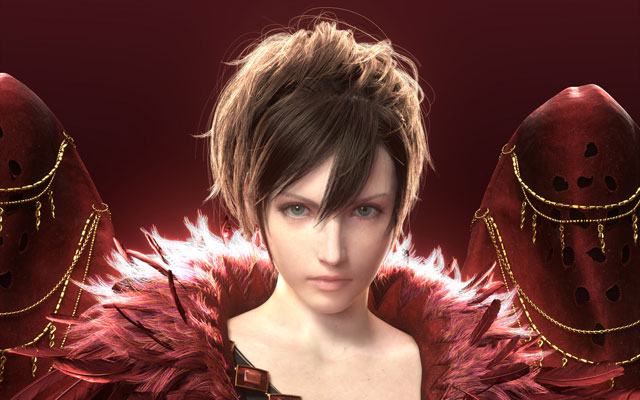
Agni's Philosophy is a Final Fantasy tech demo revealed in E3 2012, re-shown in Sony's PlayStation 4 Conference in February 20, 2013, showing what a future Final Fantasy game might look like using Square Enix's
Luminous Engine game production environment, developed for creating
games for next generation games consoles. Because it is a game engine
demo, Agni's Philosophy is not meant to show what an actual future game would look like, but to advertise the technical power of the engine.
Everything in the video is said to be running in real-time. The
demo video is said to depict real time computer graphics at the same
level as pre-rendered computer graphics and the fine details of the
characters are showcased through their facial expressions, subtleties of
their pupils and hair, and their flowing garments. Agni's Philosophy is said to have been created through the lens of the Final Fantasy series, in a world where magic and science coexist.
Closed-up picture of Agni.
An official website was opened for the tech demo where the demo can
be viewed. The site was created with a survey asking fans' opinions on
the movie, Agni's character and the world the movie takes place in.
Although this implies "Agni" and this scenario may be used in future
video game scenarios, there is no evidence suggesting that a game based
on this material is in production.
The tech demo was powered by current PC hardware, using a single nVidia GTX 680 graphics card with 16 GB RAM.
Video Synopsis
The video depicts a temple before an impending solar eclipse,
where a group of red-robed mages and their crystal-wielding Grandmaster
are attempting to summon a sacred dragon. Partway through the ritual,
armed men storm the temple and attack the mages. One mage, Agni, fights
alongside the others to protect the Grandmaster, but shows little
control over her magic.
Despite the mages' efforts, all but Agni fall, and the Grandmaster is gravely wounded. He hands the crystal
to Agni, who escapes to the streets, the armed men in hot pursuit. As
the men release a mutated hyena, Agni manages to lose her human pursuers
before using a potion-like item to heal her bullet wounds. The hyena
catches up with her and pins her down, but Agni uses the crystal to
summon the dragon from the temple. The dragon destroys the hound, and
Agni later climbs on its back and soars to the skies, revealing a
gleaming futuristic city on the horizon.